The digital advertising landscape of 2026 is no longer defined by simple keyword targeting or demographic filters. It is a high-stakes algorithmic war between two giants: Meta, with its established "Interest Graph," and TikTok, the pioneer of the "Content Graph." For business owners and CMOs, the question isn't which platform is "better," but which one aligns with your technical infrastructure, creative capacity, and bottom-line goals.
As we navigate the complexities of a post-cookie world where AI-driven "Advantage+" and "Smart Performance" campaigns handle the heavy lifting of targeting, the real differentiator has shifted toward data quality and creative resonance. In this deep dive, we’ll compare the technical DNA of Meta and TikTok to help you decide where to allocate your next $100,000 of ad spend.
1. Algorithm DNA: Interest Graph vs. Content Graph
The fundamental difference between these platforms lies in how their AI engines predict user behavior. Meta (Facebook and Instagram) has spent two decades building an Interest Graph. This is a map of who you are, who your friends are, what you’ve liked in the past, and your historical purchase behavior. It is predictive based on identity.
TikTok, on the other hand, operates on a Content Graph. It doesn't care who you follow or what you liked three years ago. It only cares about what you are watching right now. TikTok's algorithm is designed to identify "micro-trends" and "state of mind" based on your instantaneous engagement with video signals (watch time, re-watch rate, and skip rate).
In 2026, Meta has attempted to bridge this gap by introducing "Discovery Engines" into Reels, which operate more like a content graph. However, Meta’s core strength remains its ability to understand long-term user stability. If someone is a frequent traveler, Meta knows it from their historical check-ins and friend network. TikTok only knows they are a traveler if they are watching travel videos in their current session. This makes Meta superior for high-LTV (Lifetime Value) products, while TikTok is the undisputed king of impulse-driven acquisition.
2. The CPM vs. CPA Paradox: Why Lower Costs Can Be Deceptive
From a purely financial standpoint, TikTok often looks like the winner. In 2026, CPM (Cost Per Mille/Thousand Impressions) on TikTok remains significantly lower (30-50% less) than on Instagram or Facebook. This attracts many brands looking for "cheap reach."
However, CPA (Cost Per Acquisition) tells a different story. Meta’s users generally exhibit higher purchase intent. Because Meta’s conversion tracking (via its Conversions API or CAPI) is more mature and integrated with Shopify/BigCommerce ecosystems, its "bottom-of-funnel" efficiency often outperforms TikTok. You might pay $20 for 1,000 impressions on Meta and $8 on TikTok, but if Meta converts at 3% and TikTok at 0.5%, the "expensive" platform is actually the more profitable one.
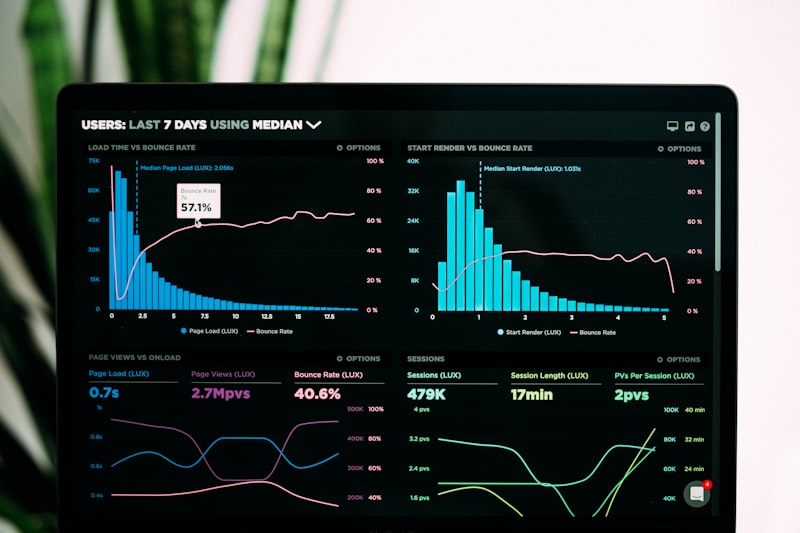
To win on TikTok, your creative must "stop the scroll" within the first 1.2 seconds. On Meta, you have a bit more breathing room (roughly 2.5 seconds) because users are accustomed to browsing at a slightly slower pace. If your creative isn't optimized for TikTok's "fast-burn" environment, your low CPMs will quickly lead to a high CPA and a negative ROAS. We often see brands "burning" budget on TikTok because they treat it like a billboard rather than a high-velocity feedback loop.
3. Creative Strategy: The Death of "Ad-looking" Ads
In 2026, the line between "content" and "ads" has blurred into oblivion. On TikTok, the mantra "Don't make ads, make TikToks" is no longer just advice—it's a technical requirement. TikTok’s algorithm penalizes videos that look like traditional commercials with low engagement scores, which in turn drives up your costs in the auction.
UGC (User Generated Content) is the undisputed king of TikTok. Raw, authentic, and filmed on a smartphone—this is what converts. Paradoxically, high-production commercials often fail on TikTok because they trigger "ad blindness" immediately. The 2026 standard for TikTok creative is "lo-fi, high-emotion."
Meta is more versatile. While UGC performs exceptionally well on Reels, Meta’s "Static Image" and "Carousel" ads still drive significant revenue for e-commerce, especially in the luxury and high-ticket service sectors where "prestige" and "polish" matter. A high-production video that feels like a cinematic experience can still find a home on the Instagram Feed, whereas it would likely be skipped instantly on TikTok. Meta's Dynamic Creative Optimization (DCO) also allows you to mix and match headlines, descriptions, and assets in a way that TikTok's current automated systems still struggle to replicate perfectly.
4. The 3:3:3 Creative Testing Workflow
To succeed on either platform in 2026, you need a systematic testing framework. We recommend the 3:3:3 Method:
- 3 Hooks: Test three different opening segments (the first 2 seconds) to see what stops the scroll.
- 3 Bodies: Test three different ways of explaining the value proposition (the middle 15 seconds).
- 3 CTAs: Test three different calls to action (the final 3 seconds).
On TikTok, you should be cycling through these tests every 72 hours. TikTok's creative fatigue is 5x faster than Meta's. On Meta, a winning creative combination can often run for 4-6 weeks before performance starts to degrade. This "Creative Maintenance" cost is often overlooked when businesses calculate their true ROI.
5. Retargeting Capabilities: Advantage+ vs. Smart Performance
Retargeting is where the battle for the "Full Funnel" is won. Meta’s Advantage+ Shopping Campaigns (ASC) have revolutionized how we approach e-commerce. ASC is an automated solution where Meta’s AI manages targeting, creative testing, and retargeting simultaneously. It is incredibly efficient at finding people who have previously engaged with your brand and pushing them toward a purchase.
TikTok’s response is Smart Performance Campaigns (SPC). While SPC has made huge strides, TikTok’s retargeting engine is fundamentally different. Because the Content Graph is so focused on the "now," TikTok struggles more than Meta with long-term attribution. If a user sees your ad on TikTok but doesn't buy for 7 days, TikTok is less likely to successfully retarget them than Meta’s cross-device ecosystem (WhatsApp, Messenger, IG, FB).
6. Measurement and Attribution: The CAPI Battle
With the total disappearance of third-party cookies, both platforms have moved to server-to-server tracking. Meta’s Conversions API (CAPI) is currently the most robust in the industry. It allows businesses to send data directly from their server to Meta’s, bypassing ad blockers and browser limitations. This provides a "high match rate" for events like "Add to Cart" and "Purchase."
TikTok’s Events API is catching up, but it still requires more manual configuration to achieve the same level of accuracy. Furthermore, TikTok’s attribution models are often criticized for over-claiming "View-Through Conversions." When analyzing your data, it is critical to use a third-party attribution tool to see the truth behind the platform-reported ROAS.

7. First-Party Data Strategy in 2026
Regardless of the platform you choose, your success in 2026 depends on your first-party data. This means capturing emails and phone numbers as early in the funnel as possible. Meta's Lead Forms have become incredibly sophisticated, often converting at a higher rate than external landing pages. TikTok has also improved its Lead Generation tools, but the quality of leads on TikTok often requires a more aggressive follow-up sequence due to the impulsive nature of the platform.
Feeding this data back into the platforms via "Offline Conversions" is the secret weapon of high-growth brands. By telling Meta and TikTok which leads actually turned into high-value customers, you allow their AI to find more people like them, rather than just optimizing for "cheap leads."
8. The Decision Matrix: Where Should You Invest?
| Factor | Meta Ads | TikTok Ads |
|---|---|---|
| Primary Audience | 25-65+ (Broad) | 13-40 (Youth-centric) |
| Algorithm Type | Interest/Identity Graph | Content/Entertainment Graph |
| Creative Fatigue | Medium (4-6 weeks) | High (3-7 days) |
| Tracking Maturity | Advanced (CAPI) | Evolving (Events API) |
| Best For | Stability, LTV, Retargeting | Scale, Virality, Awareness |
9. Conclusion: The Multi-Channel Growth Machine
In 2026, the "Meta vs. TikTok" debate is a false dichotomy. The most successful brands build a unified data layer that allows them to track the customer journey across both platforms. They treat TikTok as their "Creative Sandbox" and Meta as their "Revenue Engine." At Agencia Cohete, we engineer full-funnel Paid Social systems that maximize ROAS across both channels. Explore our Paid Social & Meta Ads Services.