
You have set up your campaigns, added your credit card, and the clicks are coming in. But at the end of the month, the revenue doesn't match the spend. If your ROAS is stagnant and you feel like you're throwing money into a black hole, this technical deep dive is for you.
Google Ads is a double-edged sword. On one hand, it's the most powerful intent-based acquisition engine in the world. On the other, it's a platform designed by a corporation that earns billions by selling clicks—regardless of whether those clicks convert for you. To win, you must understand the engineering behind the platform and avoid the common traps that bleed budgets dry.
1. The Broad Match Trap: Why Google Wants Your Money
In recent years, Google has aggressively pushed "Broad Match" paired with Smart Bidding as the recommended setup. While "AI-driven" sounds great in a sales deck, the technical reality is often different. Broad Match allows Google to show your ads for "related searches" that frequently have zero commercial intent for your specific business.
If you are bidding on "luxury watches," Broad Match might show your ad for "how to fix a watch strap" or "watch battery replacement." These users aren't looking to buy a $10,000 timepiece; they are looking for a DIY fix. You just paid $5 for a click from someone who will never buy.
2. Conversion Tracking Failures: Flying Blind
If you aren't measuring conversions correctly, you aren't doing marketing; you're gambling. We frequently see accounts where conversion tracking is either double-counting (inflating ROAS) or missing entirely. Without accurate feedback, Google's "Smart Bidding" algorithms start optimizing for garbage data.
Moreover, the death of third-party cookies and the rise of ITP (Intelligent Tracking Prevention) means that standard browser-based tracking is no longer enough. If you are only using the basic Google Ads tag, you are likely missing 20-30% of your conversion data.
To fix this, you need to implement Enhanced Conversions and Server-Side Tagging via Google Tag Manager. This allows you to send hashed first-party data back to Google, ensuring that even if a user blocks cookies, the conversion is attributed to the correct campaign.
3. The Silent Killer: Ignoring Negative Keywords
A "Negative Keyword" list is essentially a shield for your budget. It tells Google: "Do not show my ad if the search contains this word." Most failing accounts have less than 50 negative keywords. High-performance accounts have thousands.
Without a robust negative list, you are paying for "Careers," "Free," "Jobs," "Definition," and "Wikipedia." You are paying for people researching your industry, not people buying your product. You should be auditing your "Search Terms Report" at least once a week and aggressively excluding everything that doesn't scream "I want to buy this now."
4. Chasing Vanity Metrics vs. Hard Business ROAS
Many agencies will brag about a high CTR (Click-Through Rate) or a low CPC (Cost Per Click). Don't fall for it. These are vanity metrics. A click that costs $0.10 is worthless if it never converts. Conversely, a $50 click is a bargain if it leads to a $5,000 sale.
The only metrics that matter for your bottom line are CPA (Cost Per Acquisition) and ROAS (Return on Ad Spend). If your agency is sending you reports full of "Impressions" and "Clicks" without mentioning "Qualified Leads" or "Revenue," they are hiding the fact that your budget is being wasted.
5. The Landing Page Gap: Where Good Traffic Goes to Die
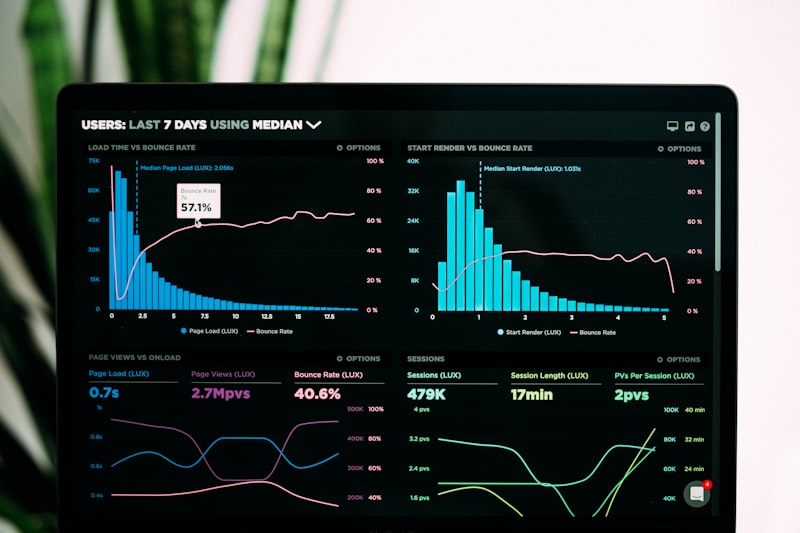
You can have the most perfect Google Ads setup in the world, but if your landing page takes 5 seconds to load or looks like it was designed in 2005, your conversion rate will crater. Google Ads is only half the battle; the other half is Conversion Rate Optimization (CRO).
Common landing page mistakes include:
- Sending traffic to the Homepage instead of a dedicated, high-intent landing page.
- Missing a clear "Call to Action" (CTA) above the fold.
- Slow mobile performance (Lighthouse score below 50).
- Lack of social proof (reviews, case studies, logos).
Every second of delay in load time reduces conversion rates by up to 20%. If you are spending $2,000/month on ads and your site is slow, you are effectively burning $400 just on technical friction.
6. Conclusion: Engineering Growth Through Precision
Google Ads is no longer a platform where you can "set it and forget it." It requires constant technical auditing, data engineering, and psychological strategy. If you want to stop burning budget and start scaling, you need to treat your PPC campaigns as a piece of high-precision software that needs regular maintenance.
At Agencia Cohete, we specialize in Growth Engineering. We don't just "manage ads"—we build acquisition systems that leverage the latest in server-side tracking, algorithmic bidding, and high-performance landing page design. Explore our Google Ads Campaign Management Services.